2nd Edition of Cell & Gene Therapy World Conference 2026
Speakers - CGTWC2026
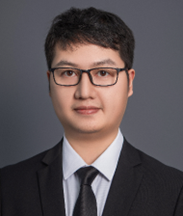
Jie Li
Jie Li
- Designation: Shenzhen Institute of Advanced Technology
- Country: China
- Title: Elucidating a plasmid partition driven bacterial density oscillational mechanism
Abstract
The bacterial density oscillator—a simple genetic regulatory circuit that drives bacterial populations to cycle between phases of proliferation and lysis—holds significant promise for applications such as live bacteria therapy for tumors, biomanufacturing, and the regulation of microbial consortia. In this presentation, I will introduce a novel theoretical model of the bacterial density oscillator. This model is driven by heterogeneity in plasmid copy number, which arises from plasmid segregational instability. Notably, this represents the third distinct type of bacterial density oscillator model. It differs from existing models in two key ways: first, those driven primarily by environmental conditions, and second, those that also rely on plasmid copy number heterogeneity but are based on differences in RNA I degradation constants. In the proposed model, during bacterial proliferation, plasmid segregational instability leads to the generation of daughter cells that carry varying plasmid copy numbers. When the plasmid harbors a density oscillator circuit, daughter cells with different copy numbers diverge toward either a "survival" or a "death" fate. Specifically, a quorum-sensing gene circuit drives synchronized expression of protein E across the bacterial population, resulting in widespread lysis and cell death. However, due to the same segregational instability, a small subpopulation of cells retaining low plasmid copy numbers escapes lysis. These surviving cells subsequently proliferate, giving rise to a new population that eventually repeats the lysis cycle. This periodic process establishes bacterial density oscillations rooted in plasmid segregational instability. Because segregational instability produces unpredictable variations in the copy number ratio among daughter cells, it introduces stochastic fluctuations in the proportion of bacterial subpopulations with different copy numbers. Consequently, the overall bacterial density oscillation becomes inherently random and challenging to control. To address this, we have employed a probabilistic model that integrates both plasmid segregation and plasmid replication mechanisms. Currently, we are developing synthetic biology strategies aimed at regulating bacterial population behavior during density oscillations. We welcome any suggestions or feedback from the community.
The 2nd Edition of Cell & Gene Therapy World Conference (CGTWC 2026) is one of those leading events that would stand high in biology and medical science. CGTWC 2026 will be held in ...
Read More>>
Organizer
